From Social Activism to the Presidency - Namibia's Netumbo Nandi-Ndaitwah
In our time, leadership often bears the fingerprints of privilege and power. Then again, revolutionaries are altering the realisms.
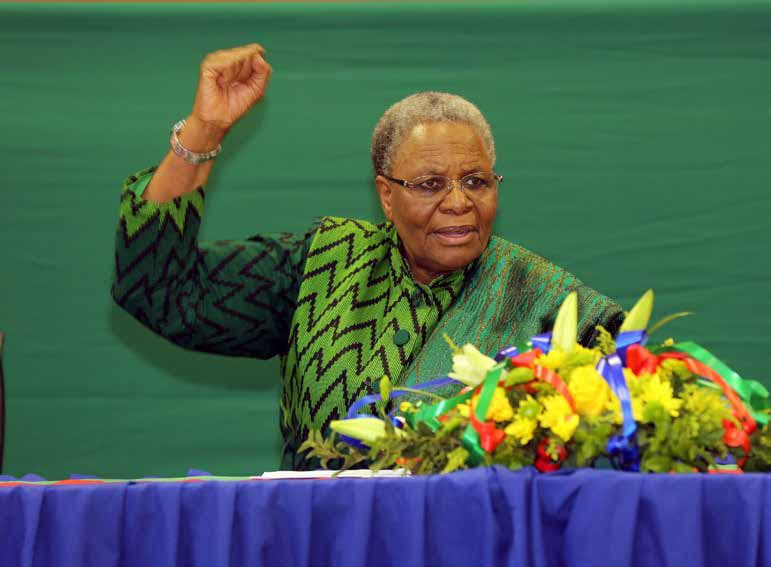
In our time, leadership often bears the fingerprints of privilege and power. Then again, revolutionaries are altering the realisms. In the vast, sun-drenched lands of southern Africa, resilience became the answer to repression. A quiet, enduring revolution bloomed in the person of Netumbo Nandi-Ndaitwah. At 72, she rose to become the first female President of Namibia — a potent symbol of possibility for her country, for the continent, and for generations of African women who dare to dream. Her story is locked in a personal saga of struggle, sacrifice, and steely resolve that now intersects with power at its highest seat. Affectionately known as NNN, Madam President’s journey from a barefoot activist in rural Namibia to the Presidency of her country stands as one of Africa’s most profound political transformations. Her life story orates like a career trajectory, a testament of defiance, a chronicle of resilience written through exile, protest, sacrifice, and ultimately, statesmanship. Today, she sits at the helm of Namibia’s destiny not as a placeholder, but as a reformer with vision. Her ascent to join the ranks of Tanzania’s President Samia Suluhu Hasan has further solidified the prominence of women in African leadership, and race to attain gender balance.
FROM RESISTANCE TO REFORM: A LIFETIME OF ACTIVISM Born in 1952 in the remote village of Onamutai in northern Namibia, Nandi-Ndaitwah was the ninth of 13 children in the household of an Anglican clergyman. Her childhood unfolded under the shadow of apartheid South Africa’s occupation of Namibia, then known as South West Africa. But while others saw limitation, young Nandi-Ndaitwah envisioned liberation. At just 14, she joined the South West Africa People’s Organization (SWAPO), then a freedom movement, not a ruling party. ‘‘Politics came in just because of the circumstances. I should have become maybe a scientist,’’ she once reflected. But the times would not allow for neutral aspirations. Her activism was not without cost. Arrested in high school for her SWAPO affiliations, she soon fled into exile. From Zambia to Tanzania, and then to the United Kingdom, where she studied International Relations, Nandi-Ndaitwah never relinquished the fight for her people’s freedom. When independence came in 1988, she was ready to return, to rebuild. Despite being raised with spiritual grounding by her Anglican priest father, the harsh realities of racial oppression ignited her political consciousness. Her activism quickly made her a target. The state tried to break her spirit. Instead, they forged her resolve.
Continue in print
This is an excerpt. Read the full story in the print edition of the AfriHeritage Magazine.
A proverb · Akan / Twi
“Sankofa.”
“Go back and fetch it.”
It is not wrong to return for what has been forgotten. The past is a resource for the future.
Continue reading